Bo Xiang
 Nanjing University
I am Bo Xiang, I am pursuing my PhD degree in the Intelligent Intelligence Laboratory of Nanjing University and working under the supervision of Prof. Jin Shi. Research on AI in healthcare, patent and business information mining, generative artificial intelligence.

Education
-
Nanjing University
Ph.D in Information Resource Management (Supervisor is Jin Shi) Sep. 2024 - now
-

Nanjing Audit University
M.S. in Business Adiministration (Supervisor is Dejian Yu) Sep. 2021 - Jul. 2024
-

East China University of Technology
B.S. in Mathematics and Applied Mathematics (Supervisor is Zhihui Yang) Sep. 2017 - Jul. 2021
Honors & Awards
- China National Scholarship 2024
- China National Encouragement Scholarship (Twice) 2020
- Special Grade Scholarship (Top 1%) 2020
- China Undergraduate Mathematical Contest in Modeling - Provincial Second Prize 2019
- The Interdisciplinary Contest in Modeling - Meritorious Winner 2019
- Teddy Cup National Data Mining Challenge - National Second Price 2019
Experience
-

DiDi Digital
Data Analyst
-

Qinglan Education
Math Teacher
-

Geminno
Front-end Engineer
Service
- Reviewer of Journal of the Association for Information Science and Technology, Journal of Medical Internet Research, Information Processing and Management, Telematics and Informatic, Electronic Markets, Expert Systems with Applications, Scientific Reports, Humanities and Social Sciences Communications, Frontiers in Psychology, PLOS One, Acta Psychologica, JMIR Medical Informatics, JMIR mHealth & uHealth, JMIR Pediatrics & Parenting, International Journal of Intelligent Computing and Cybernetics, Journal of Marketing Communications, Energy and Climate Change.
News
Selected Publications (view all )
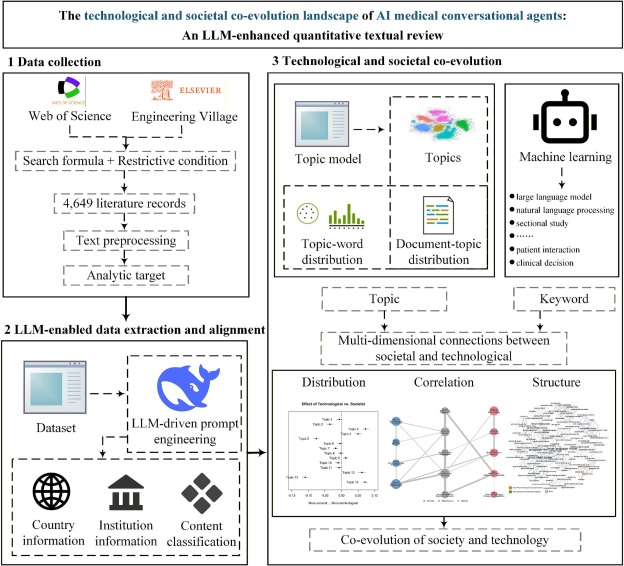
The technological and societal co-evolution landscape of AI medical conversational agents: An LLM-enhanced quantitative textual review
Bo Xiang, Zhaoping Yan, Hongcheng Wei, Jin Shi†(† corresponding author)
Expert Systems With Applications 2026 Journal
As an interdisciplinary product of artificial intelligence (AI), medical informatics, and human-computer interaction, AI medical conversational agents integrate cutting-edge technologies such as large language models (LLMs) and intelligent agents. Consequently, their application has given rise to numerous complex socio-ethical challenges. Grounded in sociotechnical system theory, this research constructs a mixed bibliometric framework integrating LLM, topic modeling, and social network analysis, which is used to explore the co-evolution landscape of technology and society in the field of AI medical conversational agents. In particular, a total of 4,649 domain-relevant bibliographic records are collected from the Web of Science and Engineering Village. Then, a hybrid architecture combining LLM-based agents and human verification is applied to data cleaning and alignment. Leveraging the language comprehension capabilities of LLMs, relevant literature is mapped into societal and technological dimensions, aligning with the sociotechnical system theory. The evaluation demonstrates that the few-shot approach yields better performance than the zero-shot approach across accuracy, precision, recall, and F1-score. Structural topic model is employed to construct a knowledge map comprising 5 main domains and 14 key research themes in the field of AI medical conversational agents. Based on the social and technical categorization of the literature, these topics are delineated into technological, societal, and neutral types. The topic correlation network reveals dense intra-category connections, whereas direct linkages between societal and technological topics are sparse, relying primarily on intermediate topics for bridging. Combining keyword-based analysis with the disciplinary classification of literature, this study unveils the intrinsic mechanism of the socio-technological co-evolution landscape. Notably, themes revolving around interactive experience and clinical utility serve as the primary bridges connecting social and technical subsystems. Overall, this study proposes a methodological framework integrating LLMs for bibliometric analysis, providing fresh insights into the critical domain of AI medical conversational agents.
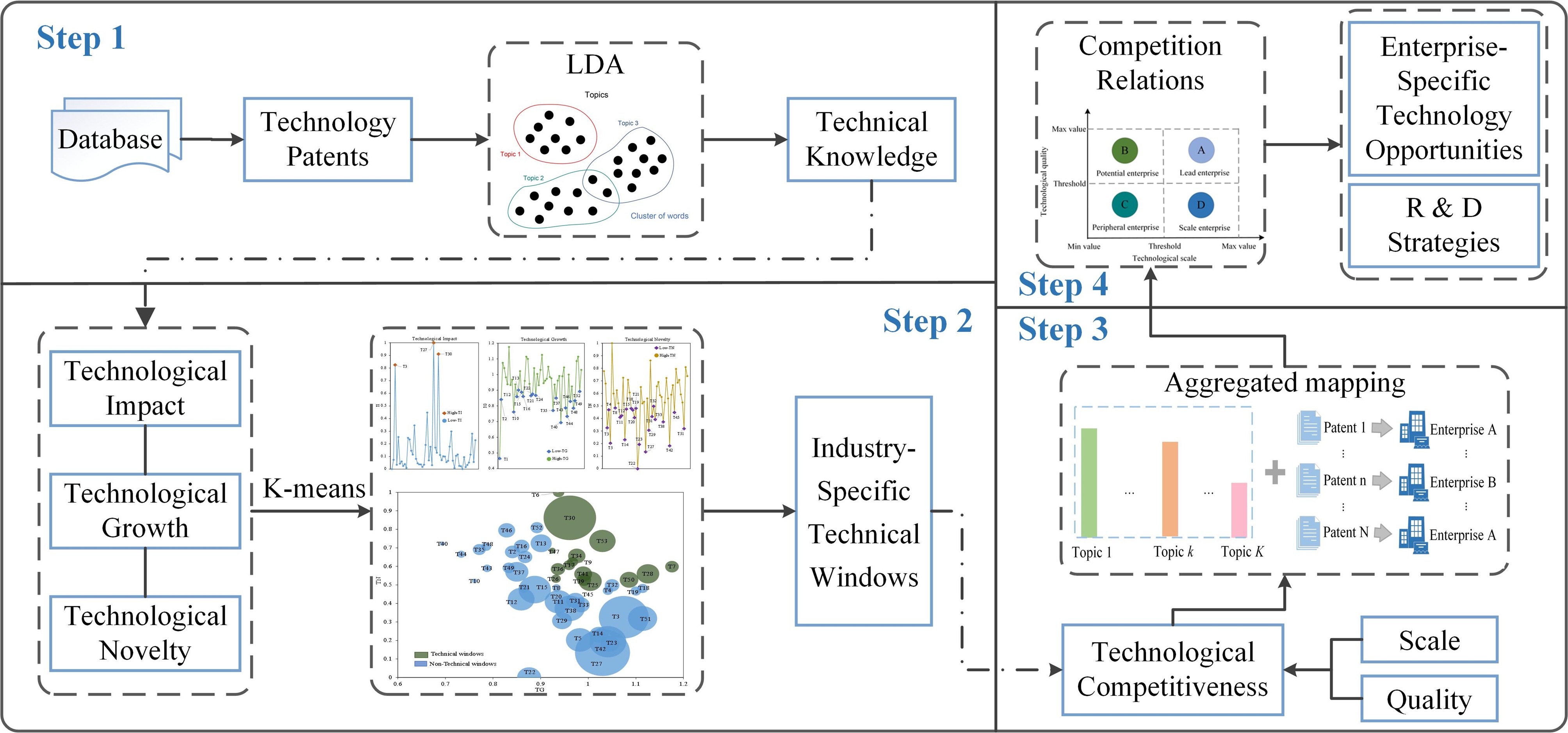
Detecting technology opportunities appropriate for enterprise R&D: The synthesis analysis of industrial technical windows and enterprise competition relations
Bo Xiang, Zhuoya Pan, Dejian Yu†, Wenjin Zuo(† corresponding author)
Technology in Society 2025 Journal
Technological opportunities (TOs) are the potential and set of possibilities for technology advances in a given industry. When enterprises are able to catch and adapt to them in a timely manner, they can grab market share from competitors who have failed to adapt to these challenges. However, when there exist large gaps between enterprises and their competitors, it should be carefully evaluated whether enterprise-specific TOs are worth exploring. Moreover, faced with diversified competitive relations, enterprises also need to formulate differentiated research and development (R&D) strategies for different TOs. To address these research gaps, this paper argues for the theoretical concepts of technical windows (TWs), emerging technologies (ETs), and TOs, and proposes a three-stage framework to detect enterprise-specific TOs.
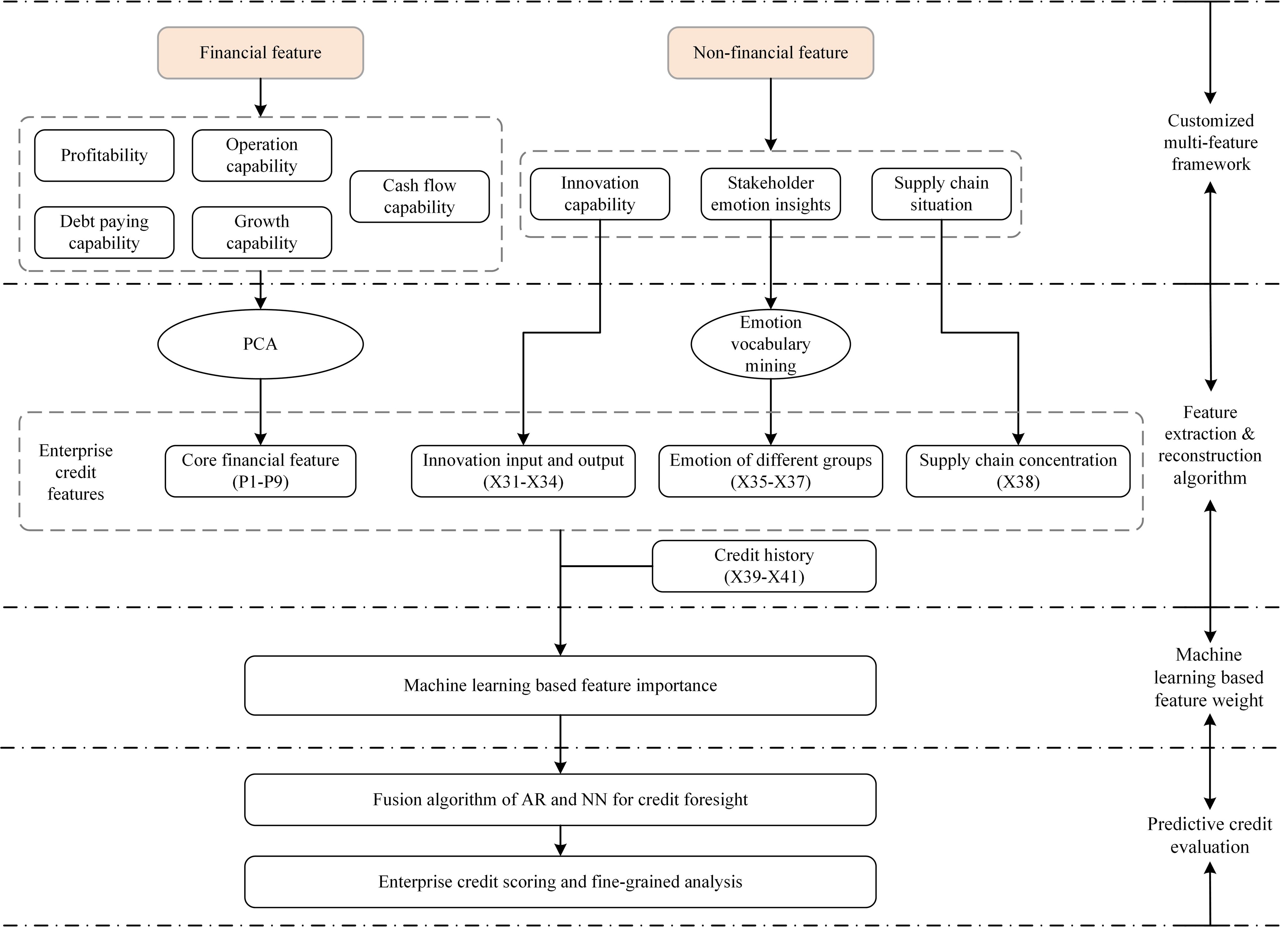
Customized integrated decision model for CBEC enterprise credit evaluation: The fusion of multi-source features and machine learning
Dejian Yu, Bo Xiang†(† corresponding author)
Electronic Markets 2025 Journal
The cross-border e-commerce (CBEC) industry plays a crucial role in the transformation of foreign trade and the upgrading of innovative development, driven by information technology and international trade policies. However, the distinctive operational pattern of CBEC enterprises necessitates the customization of the corporate credit evaluation framework to their specific features, which is absent in the existing studies. This paper proposes an integrated decision framework that incorporates multi-source features and machine learning algorithms to achieve customized credit evaluation for CBEC enterprises.
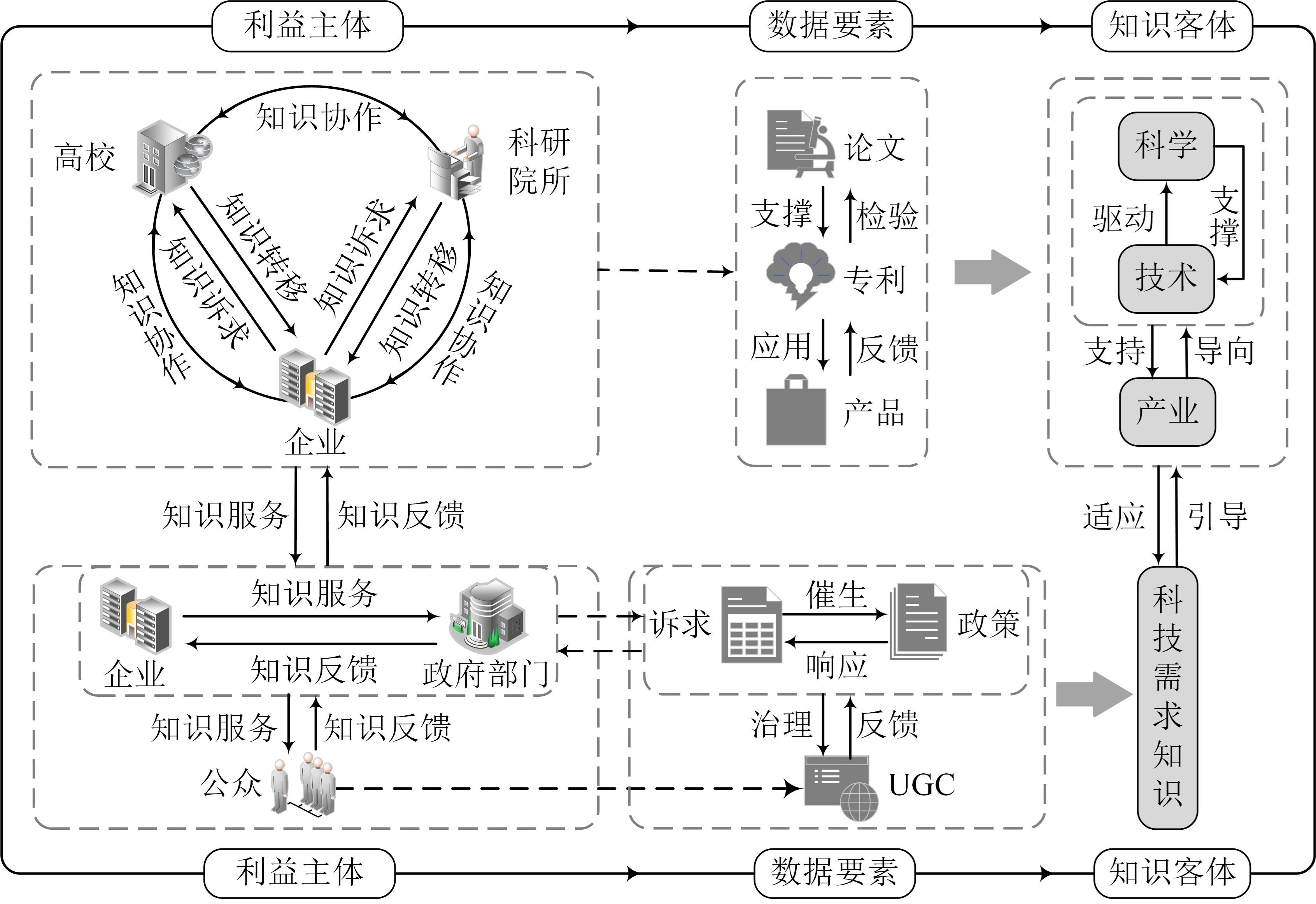
Theoretical framework on synergistic mechanism and extraction strategy of scientific and technological knowledge driven by data-intelligence
Bo Xiang, Zhaoping Yan, Zhuoya Pan, Dejian Yu, Jin Shi†(† corresponding author)
Journal of Information Resources Management 2025 Journal
It is the important issue to promote the value realization of data elements through clarifying the multiple stakeholders and multi-source heterogeneous data of scientific and technological knowledge, and their synergistic mechanism, as well as delineating the knowledge extraction paths empowered with big data and intelligent technology. Based on the process of data-to-wisdom derivation in the DIKW chain, a synergistic framework of scientific and technological knowledge involving multiple stakeholders, such as universities, research institutes, enterprises, government and the public, has been constructed, covering multi-source data such as papers, patents, products, policies and user-generated content. Then, the front-end and back-end structures of scientific and technological knowledge extraction paths are expanded, as well as the knowledge extraction outcomes and their diverse service scenarios under intelligent strategy combination patterns are explored.
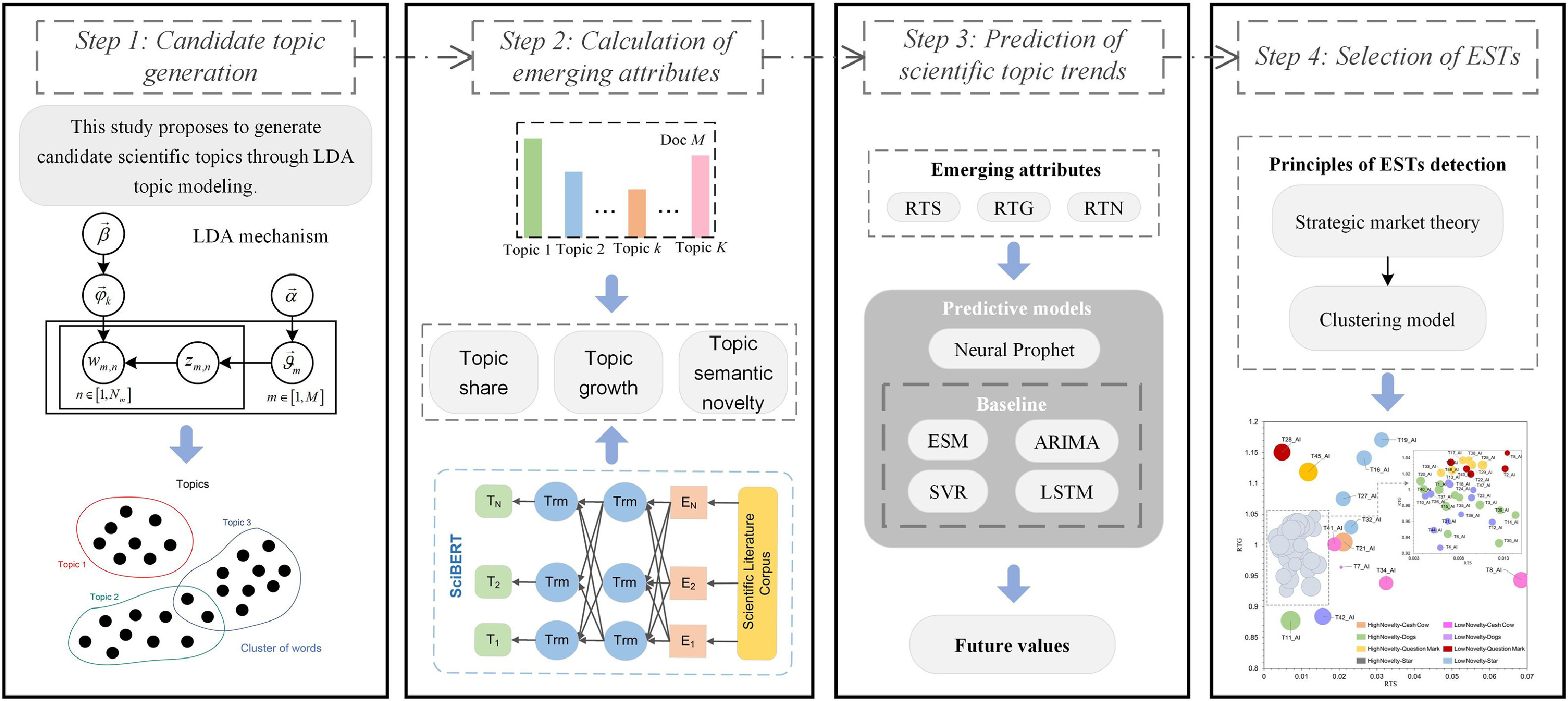
An ESTs detection research based on paper entity mapping: Combining scientific text modeling and neural prophet
Dejian Yu, Bo Xiang†(† corresponding author)
Journal of Informetrics 2024 Journal
Existing studies on the detection of emerging scientific topics (ESTs) overemphasize the newness and neglect content innovation of knowledge. Moreover, they also ignore the lag existing in knowledge diffusion. In this paper, we propose a four-stage detection framework for ESTs that maps emerging attributes from paper entities to scientific topics.
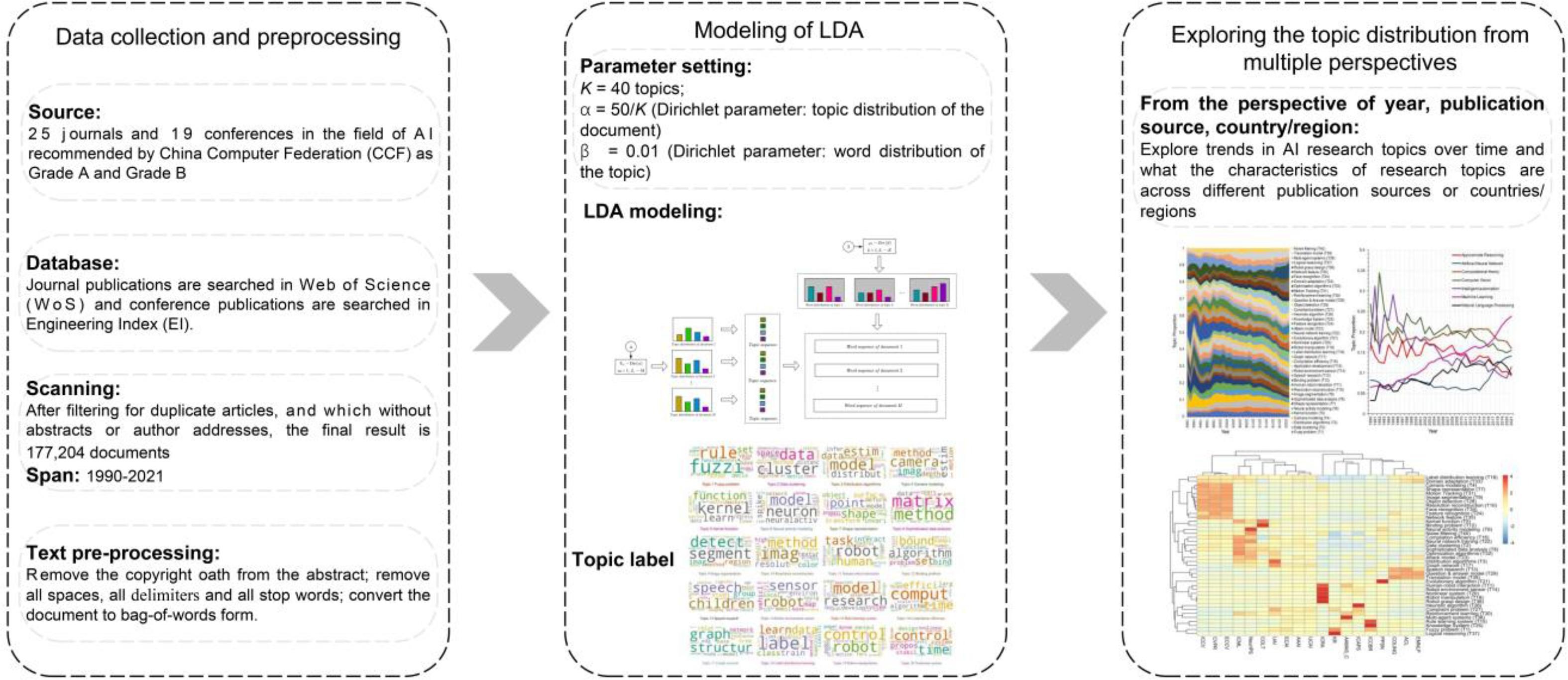
Discovering topics and trends in the field of Artificial Intelligence Using LDA topic modeling
Dejian Yu, Bo Xiang†(† corresponding author)
Expert Systems with Applications 2023 Journal
Artificial Intelligence (AI) has affected all aspects of social life in recent years. This study reviews 177,204 documents published in 25 journals and 16 conferences in the AI research from 1990 to 2021, and applies the Latent Dirichlet allocation (LDA) model to extract the 40 topics from the abstracts. This study aggregates the results of the LDA model from the perspectives of year, publication source, and country/region. The aggregated result is the topic distribution from different perspectives. Analysis of the aggregated results reveals the research characteristics of different publication sources (countries/regions) in the AI research, and which publication sources (countries/regions) have similar research content. These results provide help for scholars and research institutions to choose research directions, and new entrants to understand the dynamics of the field.